
Arizona’s $200B infrastructure boom is the best business environment most architecture and engineering principals have seen in a generation. It is also the most operationally dangerous. The capacity gap in Arizona, the distance between available project work and the licensed professionals needed to deliver it, is widening faster than local hiring can close it. For firm owners in Phoenix and Pima County, that gap is no longer a future risk. It is a present constraint determining which projects they can bid. Additionally, it determines which projects they can staff and deliver profitably.
Arizona’s Infrastructure Growth Is Outpacing Its AEC Talent
The active construction and project pipeline for Arizona infrastructure has surpassed $200B, driven by semiconductor fabrication, industrial development, and public infrastructure. The architectural engineering and infrastructure design sector in Arizona is projected to grow 28% from 2022 to 2032. Importantly, this rate far exceeds the state’s ability to produce licensed professionals through traditional education pipelines.
Arizona is projected to add more than 700,000 jobs by 2030, while 71% of employers already report difficulty finding skilled talent. Vacant positions in Arizona construction are projected to exceed 195,000 by 2026, with job opening rates up 53%. These are structural numbers, not temporary ones.
For firm principals, engineering staffing has become the main bottleneck limiting revenue growth. More work is available than teams can absorb. In addition, the gap between project demand and the state’s Civil engineer shortage is compounding every quarter.
The Numbers Behind Arizona’s AEC Talent Deficit

The U.S. engineering industry needs roughly 400,000 new engineers each year, yet nearly one-third of roles are projected to go unfilled through 2030. While recent data shows the total number of licensed U.S. architects rebounded slightly to roughly 123,000, a demographic deficit looms overhead. NCARB reports that 14% of active architects are over the age of 65, while only 3% are under 30. As baby boomers retire, local supply will contract sharply, compounding Arizona’s talent deficit right as project demand accelerates.
Arizona’s unemployment rate sits near 3.6%, meaning most local workers who want jobs already have them. The available local talent pool is effectively exhausted. Adding remote talent expands the available pool by up to 120%. Furthermore, firms that hire remotely report cost savings of up to 60% compared to equivalent local hires. For firms facing an AEC staffing shortage in Arizona, geography-agnostic hiring is a massive operational advantage, not a second-choice option.
Why Are A&E Firms in Arizona Struggling to Find Qualified Staff?
Firms are competing for the same small set of local professionals rather than recruiting from an open market. Public-sector employers, including Pima County and the City of Tucson, absorb a significant share of specialized civil engineers for floodplain management, wastewater, and capital projects. This leaves private firms with a severe Talent deficit.
Compensation inflation driven by semiconductor and industrial employers is pricing smaller firms out of competitive local hiring. At the same time, traditional recruiting timelines of 60 to 120 days mean that by the time a local hire is onboarded, project delays have already set in. Often, the project phase has passed.
Pima County Growth Drives Civil Engineering Demand
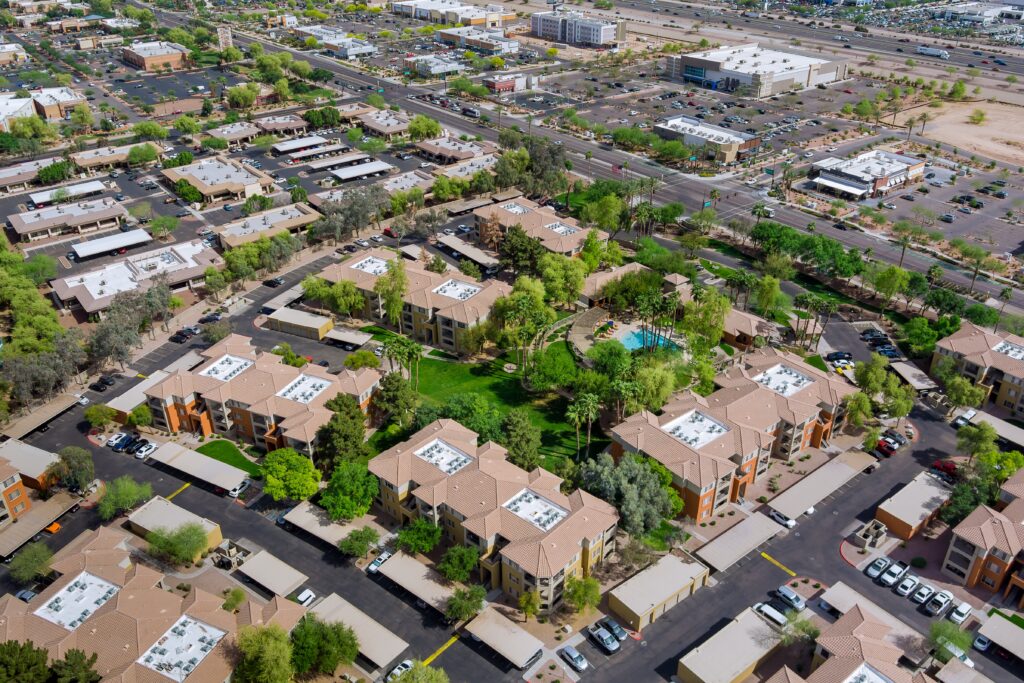
In 2026, Pima County and the City of Tucson are actively showcasing major economic development sites, signaling a regional project pipeline that will require sustained engineering and design capacity for years.
The regional gap in Tucson engineering is compounded by a smaller local labor market than Phoenix facing equal project complexity. Tucson’s growth, driven by the semiconductor supply chain, logistics, and defense projects, is creating structural engineer, Civil engineer, and MEP design demand. Local firms simply cannot meet this demand with local hires alone. For Pima County firm principals, this is a present operational constraint, not a future risk.
Hardest Roles to Recruit in Arizona A&E Firms
- Licensed Civil Engineers: Site development and infrastructure experts are among the hardest to recruit, as public agencies and large construction managers compete directly with private firms for the same credentialed professionals.
- BIM & Drafting Professionals: An experienced Revit drafter, BIM specialist, or CAD professional represents a critical bottleneck that local markets rarely solve on short notice.
- MEP Engineers & Designers: MEP design specialists are in acute shortage across Arizona, driven by the mechanical and electrical complexity of semiconductor facilities and data centers.
- Mid-Level Project Architects: Professionals with 5 to 12 years of experience who can manage documentation and run projects without heavy supervision are consistently the hardest mix of skill and experience to recruit locally.
Achieve AEC Capacity Scaling Without Full-Time Hires

Firms can achieve effective capacity scaling by integrating pre-vetted remote professionals, licensed architects, civil engineers, BIM specialists, and MEP designers. These professionals work within the firm’s existing software environment and project workflows.
Expanding the talent pool globally allows Arizona firms to access experienced professionals in disciplines that are unavailable locally. Scaling without full-time local hires eliminates fixed overhead costs, benefits, extra office space, and downtime between projects. Instead, it replaces them with flexible costs that match active project demand. Arizona firms that adopt a flexible capacity model can pursue larger project scopes. Moreover, they can offer dedicated architectural drafting services or revit services without the financial risk of permanent headcount growth.
Comparing BPO Vendors to Embedded AEC Talent
This distinction matters for every firm evaluating remote support or offshore drafting options.
| Factor | Traditional BPO Vendor | BizForce Direct-Embedded Model |
| Staff Assignment | Rotating pool across multiple clients | Dedicated professional assigned to one firm only |
| Project Context | Resets with each project or rotation | Accumulates over time inside your firm |
| Pricing Structure | Opaque, deliverable-volume-based | Transparent monthly rate |
| Quality Accountability | Vendor’s internal QA process | Firm principal has direct oversight |
| Credential Visibility | Limited or unverified | Full—verified before work begins |
| System Access | Third-party ticketing portals | Native access (CAD designers work in your tools) |
A BPO vendor manages a pool of staff who work across multiple clients at the same time. A direct-embedded staffing model assigns a dedicated professional who integrates directly into your Revit environment and communication channels, building cumulative project knowledge over time. For Arizona firms managing licensed professional liability, the embedded model reduces risk. Your firm verifies each remote professional’s credentials, experience level, and software proficiency before they produce a single deliverable.
Frequently Asked Questions
Arizona’s ~3.6% unemployment rate leaves the local talent pool largely tapped out. Public agencies and high-paying tech giants actively pull civil engineers away from private firms. Compounding the issue nationally, 14% of U.S. architects are over 65 while just 3% are under 30, creating a steep, long-term talent shortage.
Arizona’s civil engineer shortage stems from three converging forces: a $200B project pipeline creating unprecedented demand, a national shortfall of roughly 130,000 unfilled engineering roles annually through 2030, and public-sector employers absorbing a large share of locally licensed professionals.
Remote staffing places an experienced BIM specialist or Revit drafter inside your existing software environment, using your firm’s templates, file structures, and naming conventions. Structured overlap windows of 4 to 6 shared working hours allow Arizona project managers to assign work and review progress in real time.
Pima County and the City of Tucson are actively showcasing major economic development sites in 2026, signaling a sustained regional project pipeline. Tucson-area public agencies also pull licensed civil engineers away from private-sector firms, intensifying the local staffing gap in an already smaller labor market than Phoenix.
A BPO vendor assigns rotating staff across multiple clients with limited firm-specific context. A direct-embedded model assigns one dedicated professional exclusively to your firm, with full credential transparency and direct performance accountability, critical for firms managing licensed professional liability.
What Arizona Firm Principals Should Do Right Now
Firms waiting for the local talent market to self-correct are making a strategic error. The structural drivers of Arizona’s AEC capacity gap, population growth, infrastructure investment, and a declining national pool of licensed professionals, are multi-year trends.
- Perform a Capacity Audit: Map your current licensed staff hours against active and projected project demands to quantify the gap.
- Pilot a Project Phase: Test a remote embedded professional on a single project phase to validate workflow integration, quality output, and cost savings before broader adoption.
- Evaluate Staffing Partners: Benchmark providers on three criteria: credential verification rigor, workflow integration capability, and performance accountability structure.
The firms that win the most work in Arizona’s $200B infrastructure cycle will be the ones that solve the capacity equation fastest.
Scale Production & Solve Your AEC Staffing Shortage
Ready to bridge your firm’s capacity gap and scale production without local recruitment hurdles? Access pre-vetted, direct-embedded AEC talent that integrates seamlessly into your native systems. Contact BizForce A&E today!