

Architecture firms lose their top creative talent when they force management as the only path for career growth. By creating a dual tracks system, offering a parallel technical ladder alongside traditional management paths, firms protect their design talent, eliminate team burnout, and drive long-term talent retention without sacrificing administrative control.
Senior architects are leaving firms not because they dislike design, but because the only path forward requires giving up the work they love. An architecture career that advances without people management is not a niche preference, it is a structural necessity for modern firm management.
Without clear career tracks for individual contributors, firms face high architect turnover at the most expensive point in their pipeline. This guide gives firm leaders a concrete framework for building a sustainable practice structure.
Why Architecture Firms Lose Their Best Designers

Traditional studio management forces senior creators into administrative roles, a practice that often destroys the exact skills that made them valuable. Forced promotions often lead to team burnout and heavy studio overhead, with replacement costs exceeding $10,000 per specialized hire.
When high-performing creators are promoted into roles they do not want, firms suffer from a lack of role clarity. When senior designers leave, firms lose institutional knowledge, client trust, and overall design direction.
To protect firm culture and retain top talent, firms must fix the root problem: giving creative leads no viable architect career path except managing teams.
Understanding Dual Tracks in Architecture Firm Structure
A dual tracks framework offers two parallel paths for staff progression: a management track and a technical design track. This setup allows architects to gain status, higher pay, and influence without taking on daily administrative tasks.
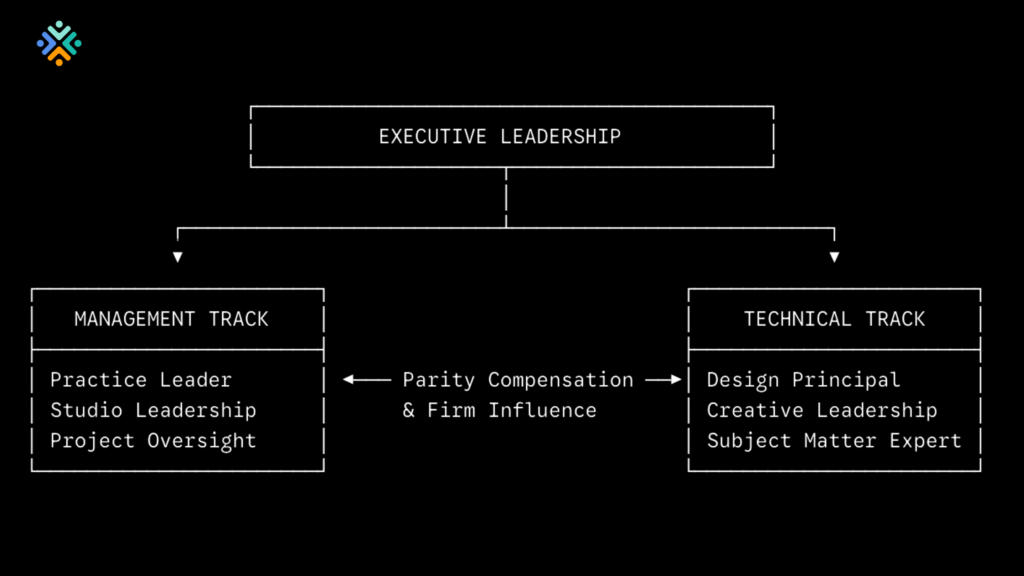
A well-defined career pathing framework removes confusion. It replaces vague tenure-based promotions with explicit goals for every individual contributor role and manager alike.
Two Distinct Roles between design principal and project manager
Combining design leadership, project oversight, and business development into one job creates a massive project manager bottleneck. Separating these roles protects creative leadership and allows for smarter resource allocation.
| Feature | Management Track | Technical / Design Track |
| Core Focus | Client budgets, schedules, practice management | Design direction, technical resolution, quality |
| Advancement Criteria | P&L ownership, team growth, business development | Portfolio quality, mentorship, design authority |
| Sample Job Titles | Project Manager, Practice Leader, Partner | Senior Specialist, Design Principal, Design Fellow |
| Salary Parity | Yes, must match technical track | Yes, matches management at equal seniority |
| Direct Management | Required | Not required |
Salary parity is essential. If a technical track pays less than a management track at equal seniority, the system fails and talent retention suffers.
How to Retain Senior Designers Who Don’t Want to Manage
Keeping experienced design leads requires three steps: clear architect job titles, equal pay bands, and reduced admin load.
If senior architects spend more than 30% of their week on spreadsheets, coordination emails, and meetings, firm capacity is diluted. Protecting senior design talent from non-design tasks is a direct profitability decision that reduces admin load across the studio.
Building a Technical Ladder for Senior Architects
Building a structured technical ladder requires five sequential steps:
- Audit Current Tasks: Review weekly schedules to see where creative work is displaced by admin load and meetings.
- Define Track Criteria: Establish clear goals for both career tracks, including portfolio quality, licensure, and subject matter expert contributions.
- Establish Salary Parity: Set senior architect salary bands for the technical track that match management roles.
- Formalize Titles: Codify official architect job titles in your studio organizational chart and HR materials.
- Protect Design Time: Restructure schedules so design leaders focus on creative work rather than routine project delivery logistics.
Why Architects Exit After Management Promotions

When designers are promoted to management, they often lose the daily problem-solving that drew them to the profession. Their time is swallowed by meetings, budget tracking, and conflict resolution.
This shift frequently leads to post-promotion exits within 12 to 24 months. The firm loses twice: it loses an exceptional designer and gains an unhappy manager. Achieving sustainable staff growth requires making daily practice both financially and emotionally rewarding.
Using Staff Augmentation to Protect Design Capacity
One of the most practical ways to protect senior design leads is using staff augmentation for production and drafting support. When embedded remote professionals handle CD sets, RFI logs, and specification updates, senior designers recover billable hours without increasing permanent studio overhead.
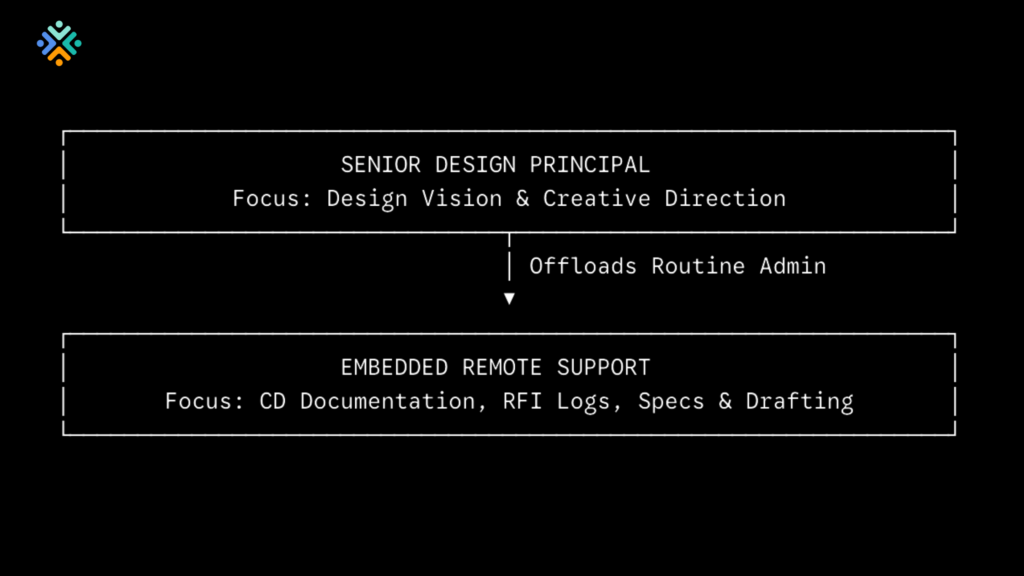
By integrating project resourcing support directly into your studio matrix, firm leaders can optimize capacity management and capacity planning without adding long-term fixed costs.
Frequently Asked Questions
Yes. A formal technical progression path allows architects to gain higher architect job titles, competitive pay, and firm influence while focusing entirely on creative output.
It is a structure offering two parallel paths, a management track and a technical design stream, each with clear promotion criteria and equal pay potential.
Firms reduce burnout by separating management tasks from design leadership, reducing admin load, and protecting creative time.
A Design Principal holds design authority and oversees creative quality. A Project Manager handles budgets, schedules, and project oversight.
Embedded production support absorbs drafting and administrative tasks, giving senior talent more time to focus on core design strategy.
Implementation Checklist for Firm Leaders

- [ ] Survey Staff: Gather baseline data on employee satisfaction, desired growth, and weekly time spent on administrative tasks.
- [ ] Draft Track Definitions: Create written role descriptions, advancement criteria, and pay bands for both career tracks.
- [ ] Pilot the Framework: Test the technical track with a small group of senior designers before a firm-wide launch.
- [ ] Align Resourcing: Pair the framework with a capacity planning model so design leads aren’t forced to handle routine administrative tasks.
- [ ] Review Annually: Treat your career pathing framework as an evolving system, adjusting roles and pay bands as your practice grows.
The firms that keep their best talent are not necessarily those that pay the most, they are the ones that build a clear, rewarding architecture career path around what their people do best.
How BizForce Supports Architecture Practice Management
Transitioning to a dual-track model requires keeping senior design leads focused on high-value creative work. BizForce helps architecture firms execute this transition by providing dedicated, pre-vetted production support that integrates directly into your existing tools, workflows, and communication channels. By offloading drafting, CD documentation, and administrative tracking to embedded remote talent, firm leaders can reduce studio overhead, protect their design talent, and scale studio output efficiently.
Schedule a consultation with BizForce to optimize your studio capacity today.